Asbestos is still present in thousands of commercial buildings across the UK, especially those constructed or refurbished before 2000. Offices, warehouses, schools, retail units, factories and public buildings all commonly contain asbestos in materials designed for fire protection, insulation, durability and noise control. Many business owners only discover it during refurbishment, maintenance or reactive repairs — making it essential to understand where asbestos is most often found, and which parts of your building may require attention. This guide outlines the typical and less obvious locations asbestos appears across commercial properties, helping you recognise potential risks and plan work safely and compliantly.
Common Locations of Asbestos in Commercial Properties
Commercial buildings often contain asbestos in materials originally installed to enhance fire resistance and thermal efficiency. One of the most widespread examples is asbestos insulation board (AIB), which was used extensively in offices, schools, hospitals and retail units. AIB can be found in partition walls, ceiling panels, firebreaks, lift shafts, plant rooms, service risers and fire door linings. Because it looks similar to standard plasterboard, it frequently goes undetected until intrusive work begins.
Another major hotspot is pipe lagging and thermal insulation, particularly in older boiler rooms, basements, service ducts and plant areas. These materials can contain high-risk asbestos and deteriorate with age, making them especially dangerous when disturbed during repairs. Many commercial properties also have asbestos ceiling tiles, which were widely used in offices and educational buildings for acoustic control and fire resistance. These tiles are often hidden above suspended ceilings, meaning maintenance teams discover them unexpectedly during electrical or HVAC works.
In industrial settings such as factories, workshops and manufacturing plants, asbestos is commonly found in cement sheets, roofing panels, flues, ducts and wall cladding, particularly across North West estates built between the 1950s and 1990s. Older retail and hospitality premises may also contain asbestos in floor tiles, adhesives, fireproof panels behind bar areas, and in soffits, facias and gutters if the building retains original external materials.
Hidden or Overlooked Areas Businesses Often Miss
Beyond the main structural components, many commercial buildings contain asbestos in small but significant places. One of the most commonly overlooked areas is plant equipment, including gaskets, ropes, heat shields, backing boards, pipe connectors and valve insulation. These components exist in nearly every building with mechanical systems, from office blocks in Manchester city centre to warehouses in Trafford Park.
Asbestos can also be found behind electrical distribution boards and in fuse carriers, meter cupboards, risers and switch rooms, particularly in council-built properties, schools and public buildings. Certain window surrounds and putties contain asbestos, especially in older aluminium or steel-framed windows found in industrial units and municipal buildings. In kitchens and catering areas, asbestos may appear behind stainless-steel splashbacks, inside oven rooms or behind older wall panels.
Finally, some large sites — especially older factories, aviation buildings, and healthcare estates — may contain asbestos in service ducts, under floor voids, insulation cavities, or in sprayed coatings applied to beams, columns and ceilings. These materials are among the highest risk and must only be handled by licensed contractors.
How Innov8 Supports Businesses Across Manchester and the UK
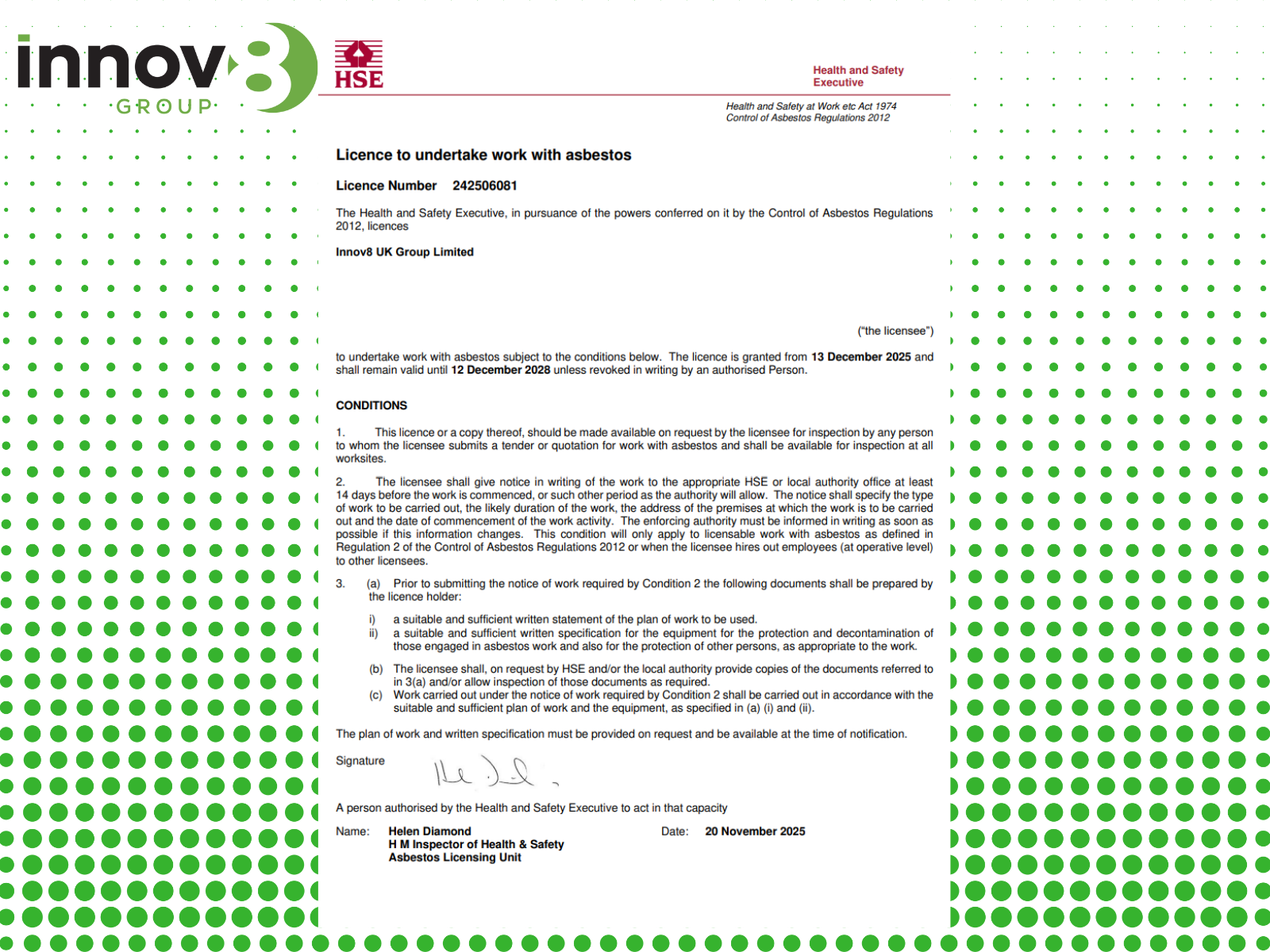
From multi-storey offices in Salford Quays to warehouses in Bury, schools in Stockport, hospitality venues in Manchester city centre and industrial plants across Trafford Park, Innov8 supports businesses of every size with fully compliant asbestos management and removal. As a fully HSE-licensed contractor with over 50 years of combined industry experience, we work closely with building owners, facility managers, duty holders and contractors to ensure all asbestos is managed safely and in line with legal obligations.
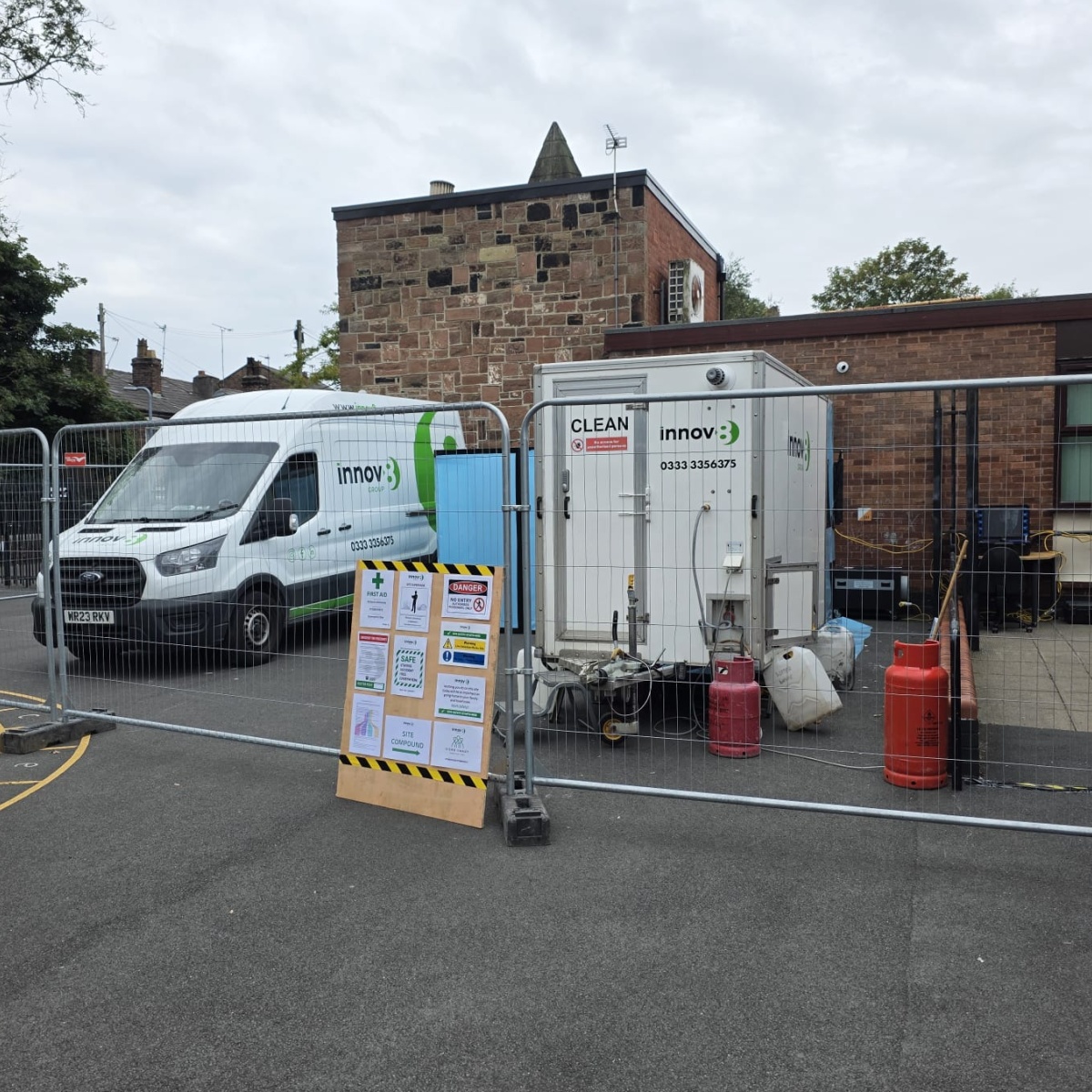
We deliver complete solutions — surveys, testing, management plans, removal, soft strip, reinstatement and hazardous waste disposal — tailored to your property type and operational needs. Whether it’s a single AIB panel in a back office or a full-scale industrial decontamination project, we provide structured project management, clear communication and minimal disruption to business operations. Fixed-price quotes, strict compliance and detailed documentation give businesses the assurance they need for audits, insurance, building control and HSE inspections.
What To Do if You Suspect Asbestos in a Commercial Property
If your building was built before 2000 and you’re planning refurbishment, maintenance or demolition, the first step is always to stop work and arrange an asbestos survey. Duty holders are legally required to manage asbestos under the Control of Asbestos Regulations, and disturbing ACMs without proper controls can result in serious fines, prosecutions and business disruption.
Whether it’s damaged ceiling tiles in an office, insulation in a plant room or cement sheets in a warehouse roof, Innov8 provides quick, compliant sampling and clear guidance on the safest next steps. If removal is needed, we manage everything from HSE notifications and enclosures to waste disposal and reinstatement, ensuring your site remains safe, compliant and fully operational.
FAQs
Which commercial buildings are most likely to contain asbestos?
Offices, schools, warehouses, factories, retail units, healthcare estates and public buildings built before 2000 commonly contain asbestos in insulation, ceiling tiles, AIB and cement products.
How much does commercial asbestos removal cost in Manchester?
Costs vary depending on material type, quantity and access. Innov8 provides fixed-price quotes and full project plans for businesses across Greater Manchester.
Do businesses need a management survey by law?
Yes. Duty holders must have an asbestos management plan and ensure ACMs are identified, monitored and safely managed.
Can asbestos be removed outside working hours?
Yes. Innov8 frequently carries out night works, weekend works and phased programmes to minimise disruption.