
Managing a commercial property comes with legal responsibilities — and asbestos is one of the most critical. If a building was constructed or refurbished before the year 2000, there’s a strong chance asbestos-containing materials (ACMs) may still be present.
For property managers, facilities managers and dutyholders, understanding where asbestos is found, how it should be managed, and what the law requires is essential to keeping occupants safe and remaining compliant.
Why Asbestos Is Still a Risk in Commercial Buildings
Asbestos was widely used in commercial construction due to its:
-
Fire resistance
-
Strength and durability
-
Sound and thermal insulation properties
As a result, asbestos can still be found in offices, retail units, warehouses, factories, schools and public buildings across the UK.
Common Places Asbestos Is Found in Commercial Properties
Asbestos may be present in:
-
Ceiling tiles and voids
-
Partition walls and wall panels
-
Asbestos insulating board (AIB)
-
Pipe lagging and boiler insulation
-
Floor tiles and adhesives
-
Lift shafts and plant rooms
-
Fire doors and service risers
Many of these materials remain hidden until disturbed during maintenance or refurbishment.
Your Legal Responsibilities as a Property Manager
Under the Control of Asbestos Regulations 2012, dutyholders must:
-
Identify asbestos within the premises
-
Assess its condition and risk
-
Keep an up-to-date asbestos register
-
Prevent disturbance of ACMs
-
Ensure contractors are informed
-
Implement a management plan
Failure to comply can result in enforcement action, fines and prosecution.
Who Is the ‘Dutyholder’?
The dutyholder is typically:
-
The property owner
-
The landlord
-
The managing agent
-
Facilities or estates management
Responsibility may be shared, but it must be clearly defined.
Asbestos Surveys in Commercial Buildings
Management Surveys
Required to manage asbestos safely during normal occupation and maintenance.
Refurbishment & Demolition Surveys
Legally required before intrusive works, refurbishments or demolition.
Skipping the correct survey is one of the most common compliance failures.
Managing Asbestos Safely in Occupied Buildings
Asbestos does not always need to be removed. Many commercial properties safely manage ACMs by:
-
Monitoring their condition
-
Labelling materials clearly
-
Restricting access
-
Training staff and contractors
-
Updating asbestos registers regularly
Removal is typically required when asbestos is damaged or will be disturbed.
What Happens If Asbestos Is Disturbed?
If asbestos is accidentally disturbed:
-
Work must stop immediately
-
The area must be isolated
-
Professional assessment is required
-
Air monitoring and clean-up may be needed
Quick action prevents further contamination and disruption.
Why Professional Support Matters
Professional asbestos contractors:
-
Ensure legal compliance
-
Protect occupants and workers
-
Prevent costly project delays
-
Provide clear documentation
-
Support audits and inspections
Cutting corners often leads to far greater costs later.
FAQs – Asbestos in Commercial Buildings
Do all commercial buildings need an asbestos register?
Yes, if asbestos is present or presumed present, an up-to-date register is required.
How often should asbestos be re-inspected?
Typically every 6–12 months, depending on condition and risk level.
Do contractors need access to asbestos information?
Yes. Contractors must be informed before carrying out any work.
Can asbestos be managed without removal?
Yes, if materials are in good condition and unlikely to be disturbed.
What happens if the HSE inspects our site?
Inspectors will review surveys, registers, management plans and contractor controls.
Need Help Managing Asbestos Compliance?
Managing asbestos properly protects people, prevents disruption and keeps businesses compliant.
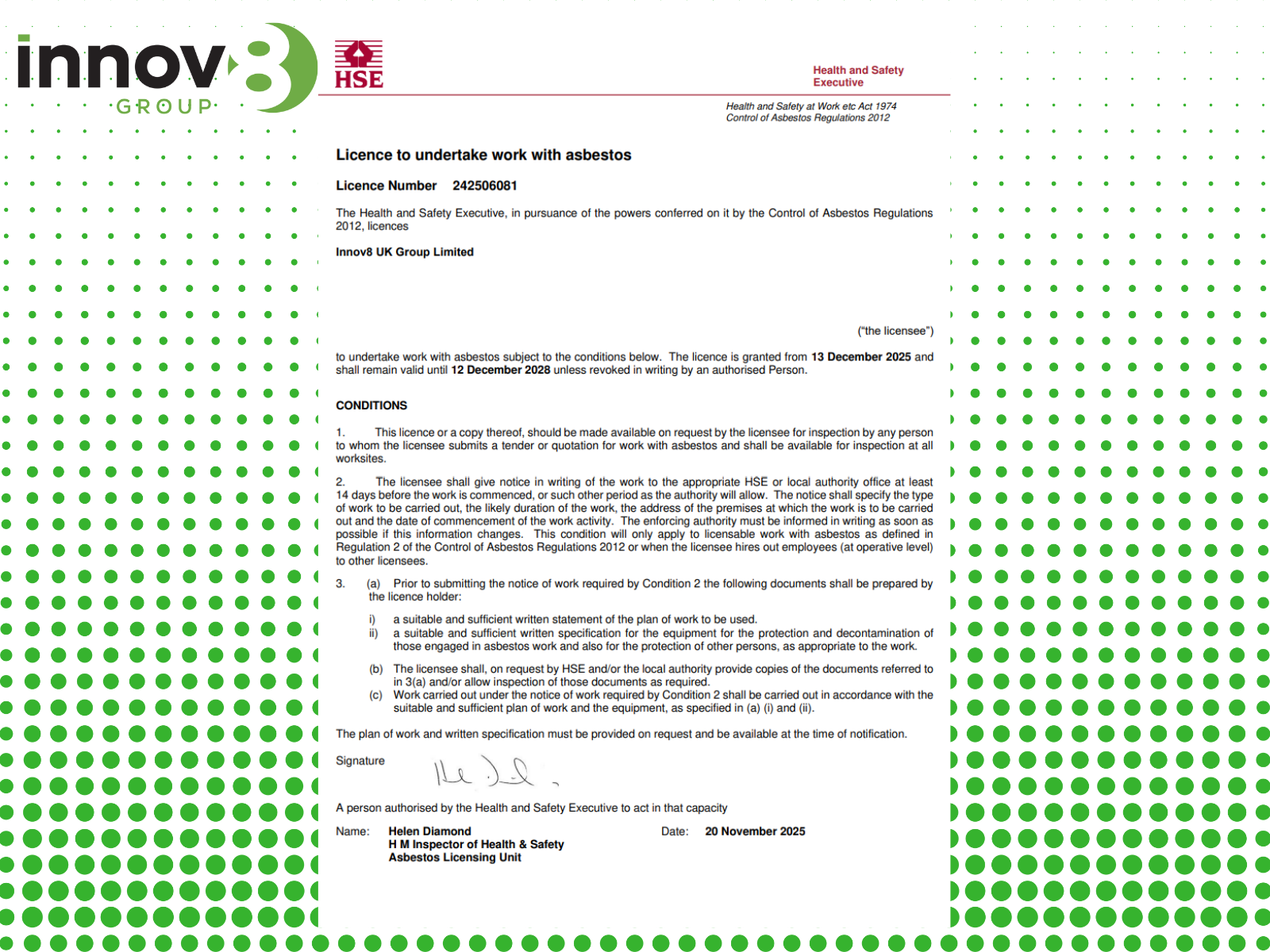
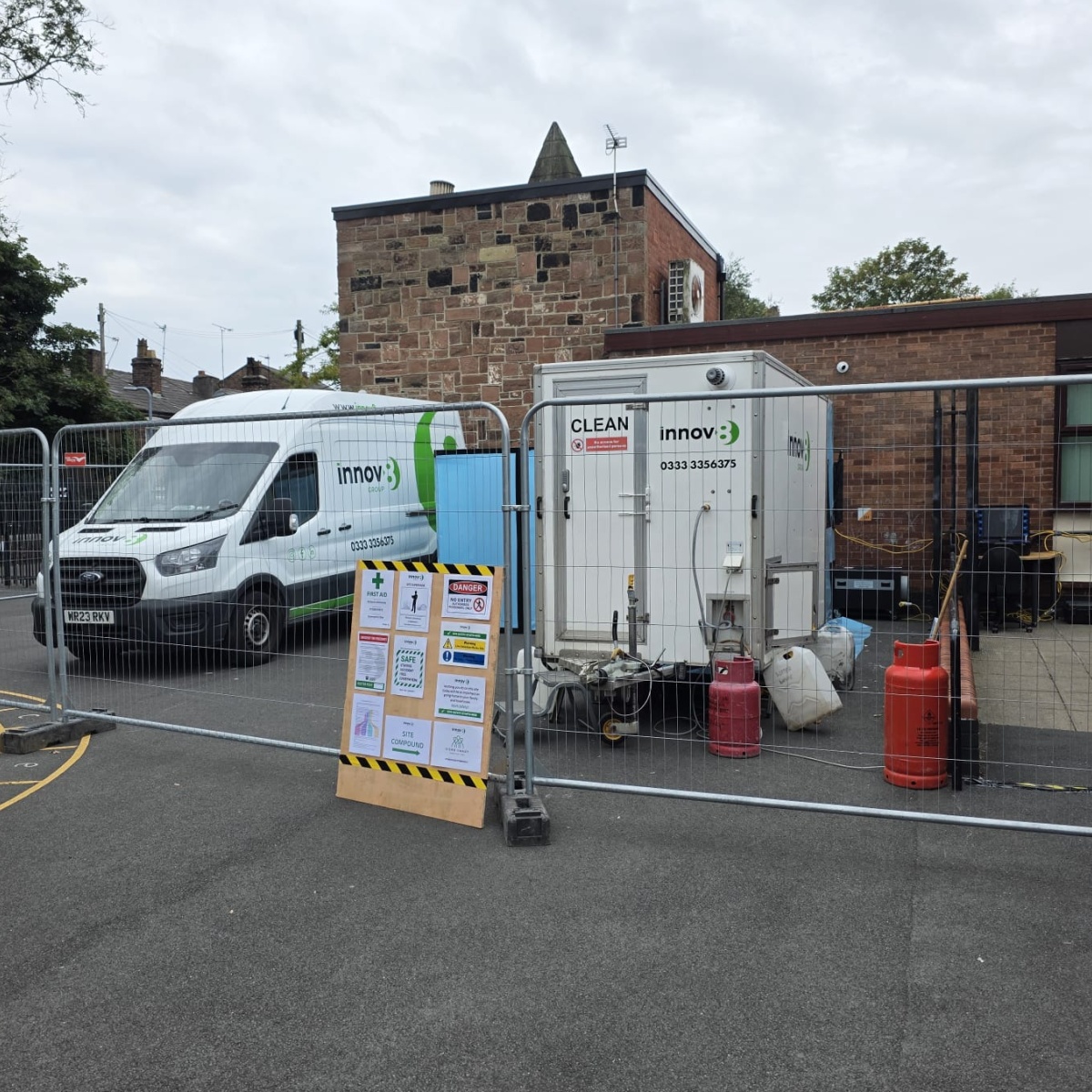
Innov8 Group Ltd supports property managers and facilities teams across the UK with asbestos surveys, management plans, air monitoring and licensed removal — all delivered with clarity and professionalism.
📞 Contact Innov8 today to ensure your commercial property meets its asbestos obligations.