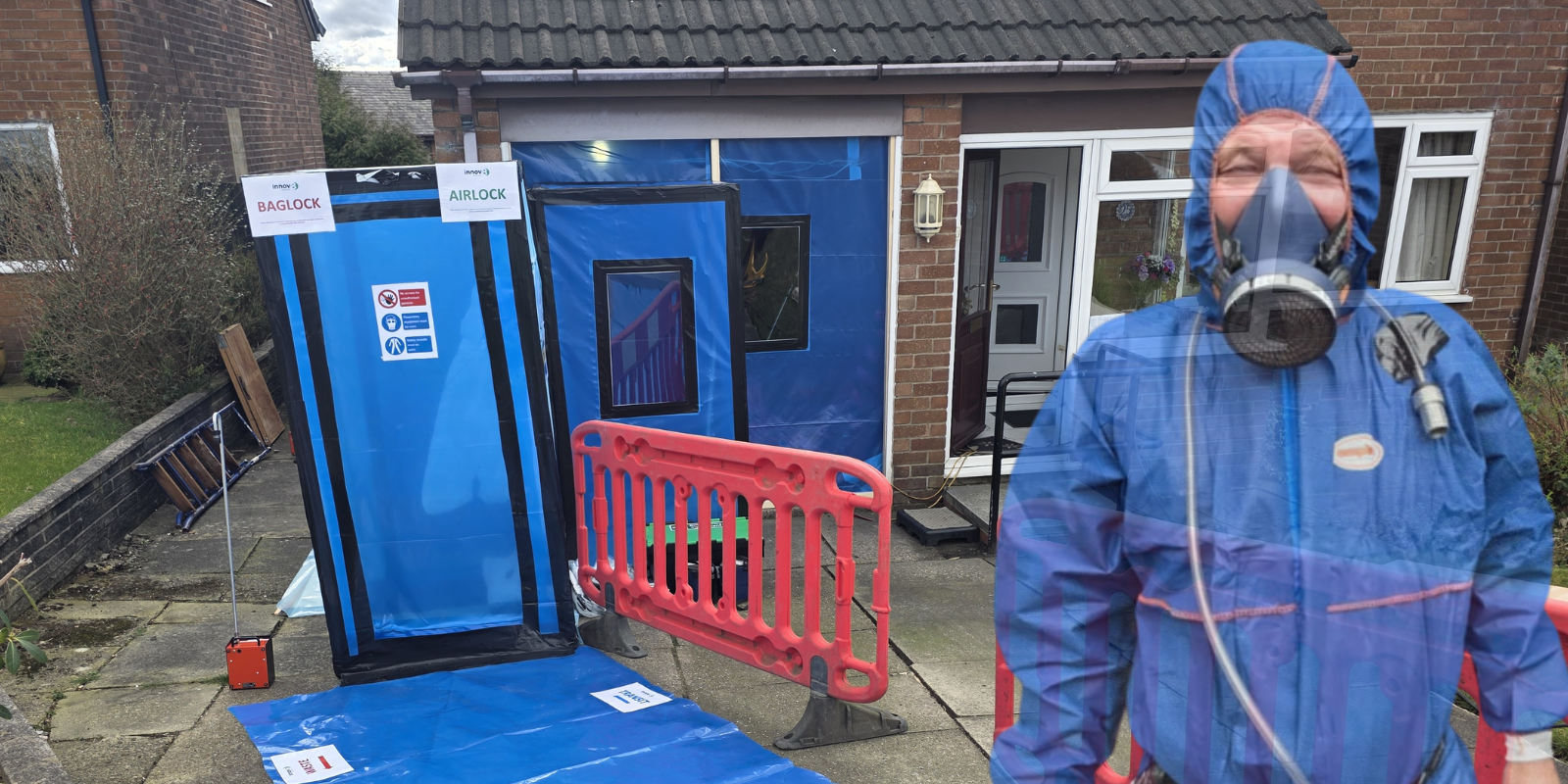
Asbestos isn’t always something that needs to be removed. In many commercial and industrial buildings across the UK — from warehouses and factories to schools, hospitals and public sector properties — asbestos encapsulation is often the safest, most cost-effective and least disruptive solution. While removal is still essential in many scenarios, encapsulation is the method used when the asbestos remains in good condition but needs to be sealed, protected or made safe so it poses no risk to building occupants or maintenance teams.
With thousands of buildings in Manchester, Lancashire and the wider North West still containing original asbestos installations, encapsulation remains one of the most valuable tools for duty holders who want to remain compliant without major structural work. This blog breaks down what asbestos encapsulation is, the materials used, which sectors benefit most, why it is often chosen over removal, and how the process works when delivered by a licensed, experienced contractor like Innov8.
What Asbestos Encapsulation Actually Means
Encapsulation involves coating, sealing or enclosing asbestos-containing materials (ACMs) so fibres cannot be released into the air. Rather than removing the ACM, the material is stabilised and protected so it remains safe in place.
Encapsulation is used when:
-
The asbestos is in good condition
-
Disturbance risk is low
-
Removal would cause unnecessary disruption
-
The ACM is part of the building’s structure and safely managed in situ
-
A business wants a cost-effective compliance solution
It is a fully compliant option under HSE guidance and widely used in commercial buildings where asbestos is present but not damaged or deteriorating.
There are four main methods:
-
Rigid Encapsulation – using boards or panels to fully enclose asbestos (common in industrial plant rooms).
-
Paint-on / Spray Encapsulation – applying specialist coatings to seal fibres and strengthen the surface.
-
Wrapping – often used on pipework, insulation and ducting.
-
Encasement Systems – long-term structural coverings that lock asbestos in place.
Each method must be chosen based on the material, risk level and operational needs of the building.
Why Encapsulation Is Often the Best Option for Commercial and Industrial Sites
While removal is still necessary in many cases, encapsulation solves several problems businesses face — particularly when downtime, cost or structural disruption are major concerns.
1. Minimal Disruption to Operations
Factories, warehouses, office blocks, public buildings and hospitals cannot always close for asbestos removal works. Encapsulation allows the ACM to remain in place, often completed in phases or outside operational hours, meaning the site stays open safely.
2. A Highly Cost-Effective Approach
Encapsulation is usually more affordable than full removal, especially for large buildings such as:
-
Manufacturing plants
-
Food production facilities
-
NHS buildings
-
Universities and colleges
-
Retail centres
-
Distribution warehouses
-
Public sector offices
By removing the need for major strip-outs and reinstatement, businesses can remain compliant without heavy refurbishment costs.
3. Long-Term Protection and Compliance
Once encapsulated, the ACM is stabilised and continues to perform safely. With proper management and periodic inspections, encapsulated asbestos can remain compliant for many years.
4. The Best Option for Hard-to-Remove Locations
Some ACMs are embedded within the fabric of the building — inside risers, beneath flooring systems, behind plant equipment or built into structural supports. In these scenarios, removal can be extremely destructive. Encapsulation offers a safe, practical alternative.
Where Encapsulation Is Most Commonly Used
In commercial and industrial buildings, encapsulation is frequently used in areas where asbestos was originally installed for fire protection, insulation or durability. Some of the most common locations include:
-
Boiler rooms and plant rooms (AIB panels, pipe lagging, insulation)
-
Service risers and vertical ducts
-
Workshop ceilings and soffits
-
Warehouse roof voids
-
Industrial pipework and steam lines
-
Behind electrical equipment or distribution boards
-
Lift shafts and motor rooms
-
Schools and public buildings (ceiling panels, panels behind radiators)
-
Hospitals and healthcare estates
-
Basements and underfloor voids
Many of these areas are essential operational spaces. Encapsulation keeps these zones safe without requiring major facility shutdowns.
Sectors That Benefit Most from Asbestos Encapsulation
Although encapsulation can be used anywhere asbestos is safely managed, there are certain sectors where it is especially effective.
Education
Schools, colleges and universities across Manchester and the North West often contain legacy ACMs in ceilings, risers, plant rooms and corridor panels. Encapsulation keeps buildings safe and compliant without disrupting teaching spaces.
Healthcare
Hospitals, laboratories and NHS estates rely on continuous operation. Encapsulation is preferred in non-public areas such as plant rooms, lift rooms and service voids where ACM removal would cause major disruption.
Manufacturing & Industrial
Factories, distribution centres, engineering sites and processing plants often have asbestos in pipe lagging, insulation and roof voids. Encapsulation allows ongoing operations while keeping staff safe.
Local Authorities & Public Sector
Civic buildings, libraries, police stations and council facilities often require an in-situ solution that maintains safety while managing taxpayer budgets responsibly.
Facilities Management Companies
For FM teams responsible for large estates, encapsulation is a practical option for long-term compliance planning.
Why Businesses Choose Encapsulation Instead of Removal
Choosing between encapsulation and removal is ultimately a safety decision, not a cost one — but in the right circumstances, encapsulation offers several clear benefits:
-
Reduced operational downtime
-
Lower project cost
-
Less disruption to staff and occupants
-
Retains the structural integrity of the building
-
Fast turnaround with clear certification
-
Fully HSE-compliant when carried out by specialists
For many duty holders, encapsulation becomes the safest way to meet legal responsibilities while keeping the building functional.
How the Encapsulation Process Works
At Innov8, we follow a structured, fully compliant process to ensure asbestos encapsulation is safe, appropriate and delivered to the highest standard.
Initial Assessment & Survey
We carry out a survey or inspection to assess:
-
Type of ACM
-
Condition and stability
-
Location and risk of disturbance
-
Suitability for encapsulation
Samples may be taken and tested through a UKAS-accredited laboratory.
Encapsulation Plan & Method Selection
We select the correct method and material based on building layout and operational needs. Duty holders receive a clear plan and safety recommendations.
Surface Preparation & Installation
The area is made safe, cleaned and prepared. Encapsulation is applied using:
-
Specialist coatings
-
Rigid boards
-
Wrap systems
-
Structural coverings
Our team ensures all work meets HSE guidance.
Labeling, Recording & Compliance Documentation
Every encapsulated area is clearly marked and added to the asbestos management plan, ensuring future teams know exactly what is present.
Ongoing Monitoring & Re-inspections
Encapsulation remains safe long-term with periodic checks — all part of ongoing asbestos management.
Why Businesses Across the North West Choose Innov8
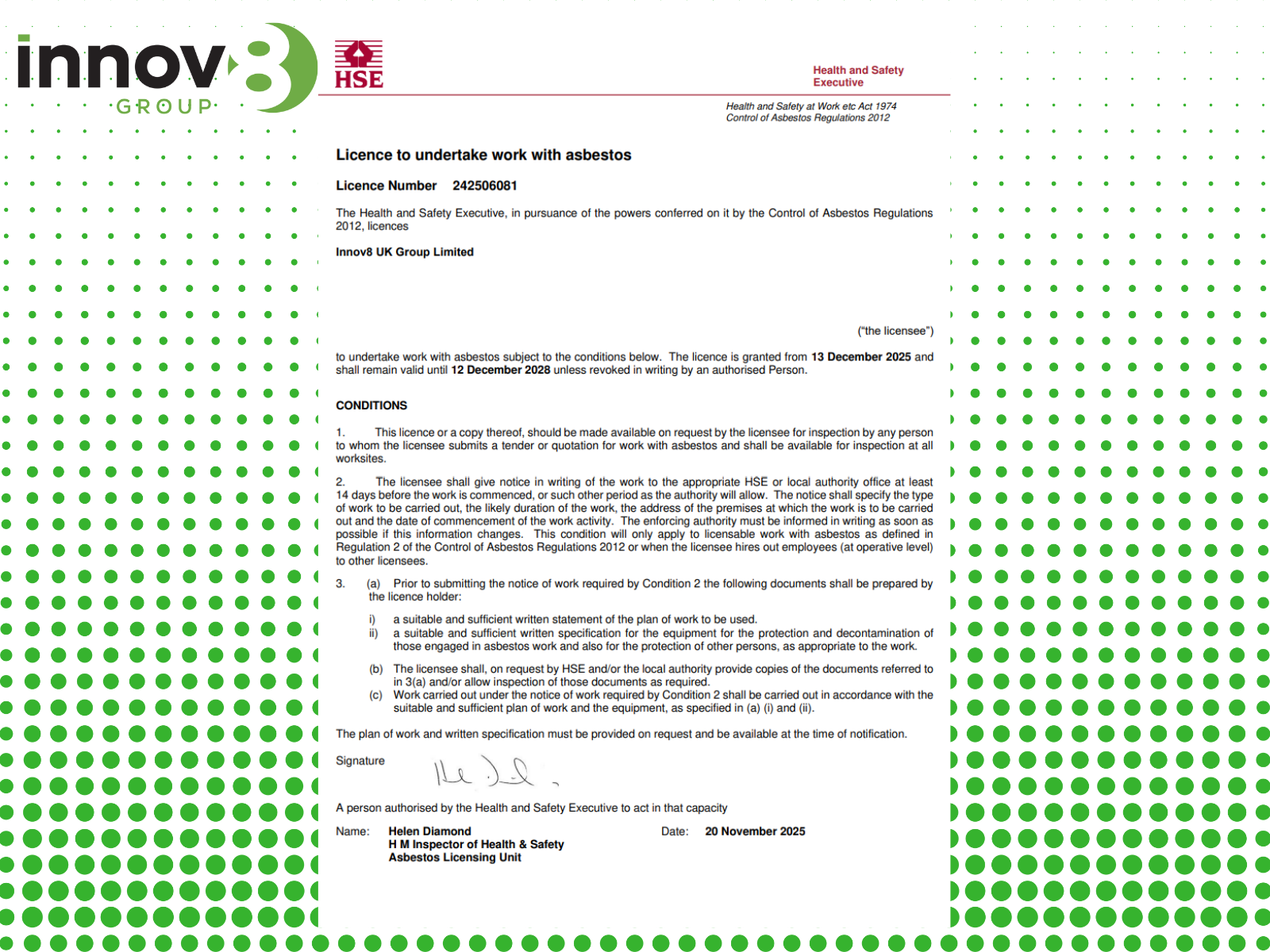
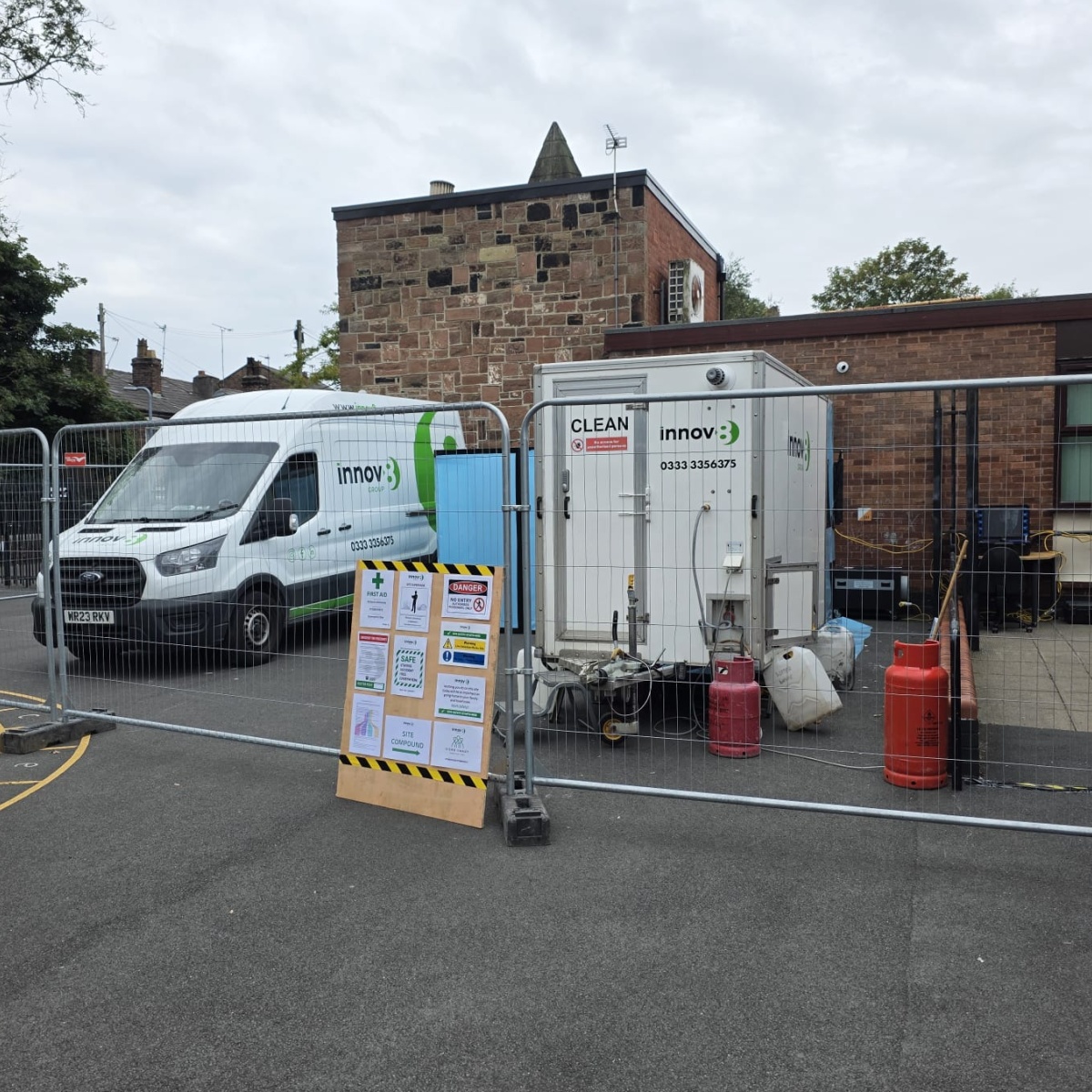
With over 30 years of combined experience, Innov8 is trusted across Manchester, Lancashire and the wider North West for delivering safe, compliant and carefully managed encapsulation works. Our team understands the intricacies of working in live environments — from schools and hospitals to industrial estates and high-risk plant rooms — and we tailor every project around operational needs.
Duty holders rely on us for:
-
HSE-licensed expertise
-
Clear, fixed-price quotes
-
Minimal disruption to operations
-
Technically accurate guidance
-
Fast response and clear communication
-
Full documentation for compliance
Whether your building requires encapsulation, removal or long-term management, we provide the safest, most practical solution.
FAQs
1. Is asbestos encapsulation safe for long-term use?
Yes. When installed correctly and monitored as part of a management plan, encapsulation is a safe, compliant long-term solution for many commercial buildings.
2. How do I know if encapsulation is suitable for my site?
Our survey will determine whether the ACM is stable enough to remain in place. Damaged or deteriorated materials may require removal instead.
3. How long does encapsulation last?
High-quality encapsulation systems can last many years. Ongoing inspections ensure the coating or enclosure remains intact.