
Refurbishment and fit-out projects are one of the highest-risk scenarios for asbestos exposure. Whether it’s an office refresh, retail refit or full strip-out, disturbing hidden materials can release asbestos fibres if the correct checks aren’t carried out first.
For developers, contractors and property managers, managing asbestos safely before work begins isn’t just best practice — it’s essential.
Why Refurbishment Work Increases Asbestos Risk
Unlike day-to-day building use, refurbishment projects involve:
-
Cutting into walls and ceilings
-
Removing floors and partitions
-
Accessing ceiling voids and risers
-
Altering mechanical and electrical systems
Many asbestos-containing materials (ACMs) are hidden until these works start — which is why so many incidents occur mid-project, not before.
Buildings Most at Risk During Fit-Outs
Asbestos may still be present in:
-
Offices
-
Retail units
-
Industrial buildings
-
Schools and colleges
-
Healthcare facilities
-
Public buildings
Any property built or refurbished before 2000 should be considered at risk.
The Legal Requirement Before Work Starts
Under the Control of Asbestos Regulations 2012, a Refurbishment & Demolition (R&D) asbestos survey is required before any intrusive work begins.
This survey:
-
Is fully intrusive
-
Identifies all ACMs likely to be disturbed
-
Must be completed before contractors start
Skipping this step is one of the most common — and costly — mistakes in refurbishment projects.
What Happens If Asbestos Is Found Mid-Project?
If asbestos is discovered once work has started:
-
All works must stop immediately
-
Areas must be isolated
-
Emergency surveys may be required
-
Licensed removal may be needed
-
Timelines and budgets are impacted
Early identification avoids delays, disputes and compliance issues.
Managing Asbestos Safely During Fit-Outs
1. Carry Out the Correct Survey
An R&D survey provides clarity and allows safe planning.
2. Plan Removal or Management in Advance
If asbestos is present, removal or encapsulation should be scheduled before refurbishment begins.
3. Communicate With All Contractors
Everyone on site must understand:
-
Where asbestos is located
-
What areas are restricted
-
What procedures are in place
4. Use Licensed Professionals
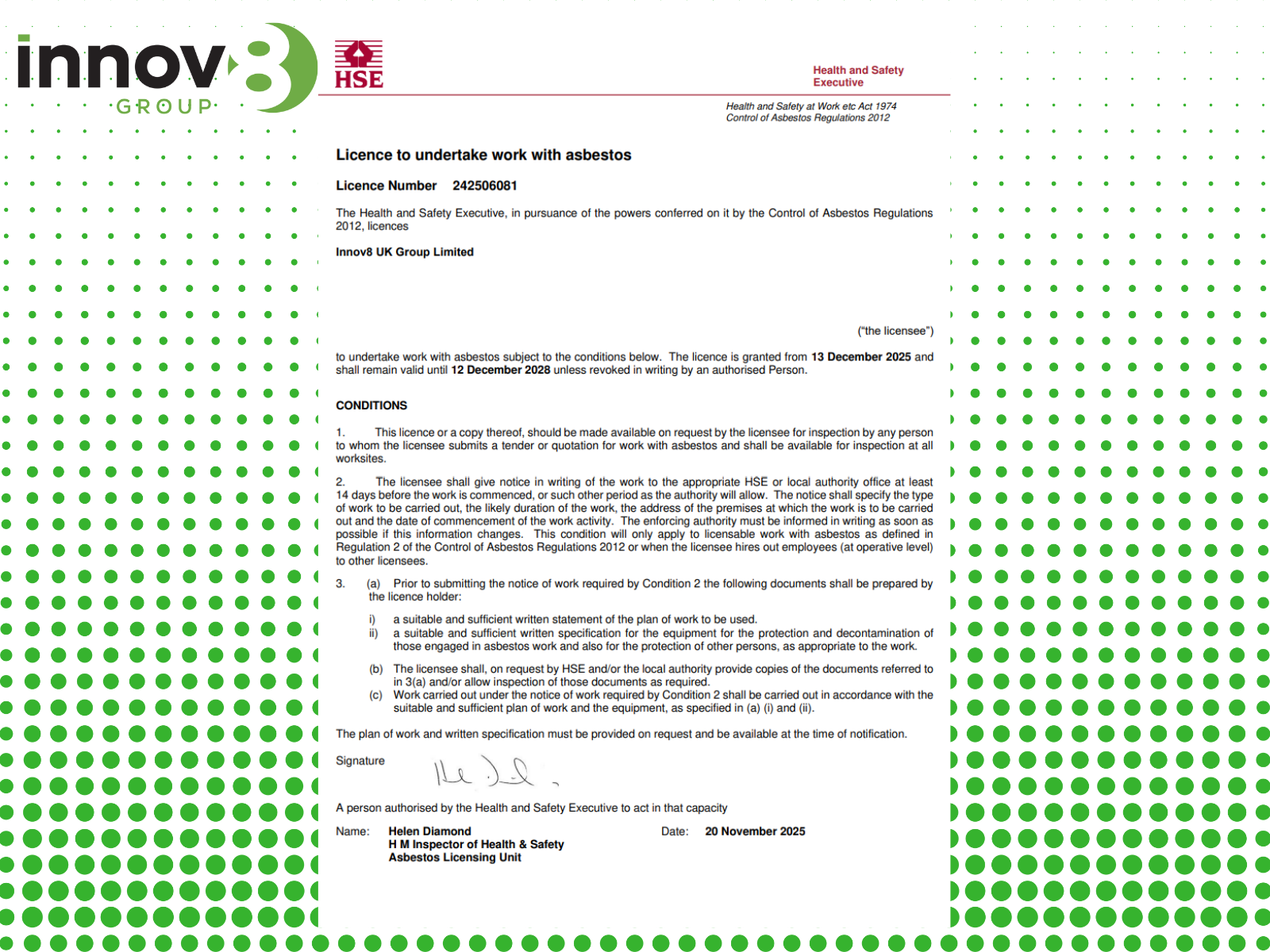
Higher-risk materials require HSE-licensed contractors and controlled environments.
Who Is Responsible on a Fit-Out Project?
Responsibility may sit with:
-
The building owner
-
The landlord
-
The principal contractor
-
The client or developer
Clear responsibility must be established before work begins, not after issues arise.
Why Early Asbestos Planning Saves Money
Proper asbestos planning:
-
Prevents project delays
-
Reduces emergency call-outs
-
Protects workers and occupants
-
Avoids enforcement action
-
Keeps refurbishment programmes on track
Asbestos isn’t the expensive part — poor planning is.
FAQs – Asbestos & Refurbishment Projects
Do I need an asbestos survey for internal refurbishments?
Yes. If materials will be disturbed, a refurbishment survey is required.
Can fit-out contractors start work before survey results?
No. Work should not begin until asbestos risks are fully understood.
What if asbestos is only in one small area?
Even small amounts must be managed or removed safely before works proceed.
Does asbestos always delay refurbishment projects?
No — when identified early, it can be planned into the programme with minimal disruption.
Who should arrange asbestos removal on a project?
This should be agreed at the planning stage between dutyholders and contractors.
Planning a Fit-Out? Get Asbestos Sorted First
Safe refurbishment starts with knowing what’s hidden behind walls, ceilings and floors.
Innov8 Group Ltd supports refurbishment and fit-out projects across the UK with professional asbestos surveys, management strategies and licensed removal — keeping projects compliant, safe and on schedule.
📞 Contact Innov8 today to plan asbestos safely into your refurbishment project.