Demolition today is far more than knocking buildings down. For most commercial and industrial sites in Manchester and across the UK, it involves careful sequencing, soft strip work, safe handling of hazardous materials, asbestos management, waste removal, structural alterations and enabling works that prepare a site for future development. As buildings age, evolve, or reach the end of their life cycle, businesses and developers increasingly need a contractor that can handle every element safely, efficiently and with full compliance.
That is exactly where Innov8 stands out.
Because we specialise in asbestos removal and demolition, we offer a streamlined approach that many contractors cannot match. Instead of hiring multiple companies — one for asbestos, one for soft strip, one for waste management — businesses can rely on a single, fully qualified team. This approach saves time, prevents delays, reduces costs and ensures every part of the process follows strict Health & Safety Executive (HSE) guidelines.
In this article, we break down what our demolition services include, why they matter, the property types we support and how our combined expertise in asbestos and environmental services makes us a smarter, safer choice for 2025 and beyond.
Why Modern Demolition Requires Far More Than Demolition
Most commercial and industrial buildings constructed before 2000 contain asbestos somewhere in the structure — in ceiling panels, partition walls, ducts, boilers, risers, roof sheets or insulation. That means almost every demolition project has a hidden risk that must be identified and managed before any physical work begins.
Traditionally, demolition firms would subcontract asbestos work to a separate removal company. This approach often created issues:
-
Delays due to scheduling conflicts
-
Increased costs from multiple contractors
-
Gaps in communication
-
Limitations on project planning
-
Higher risk if information is misreported
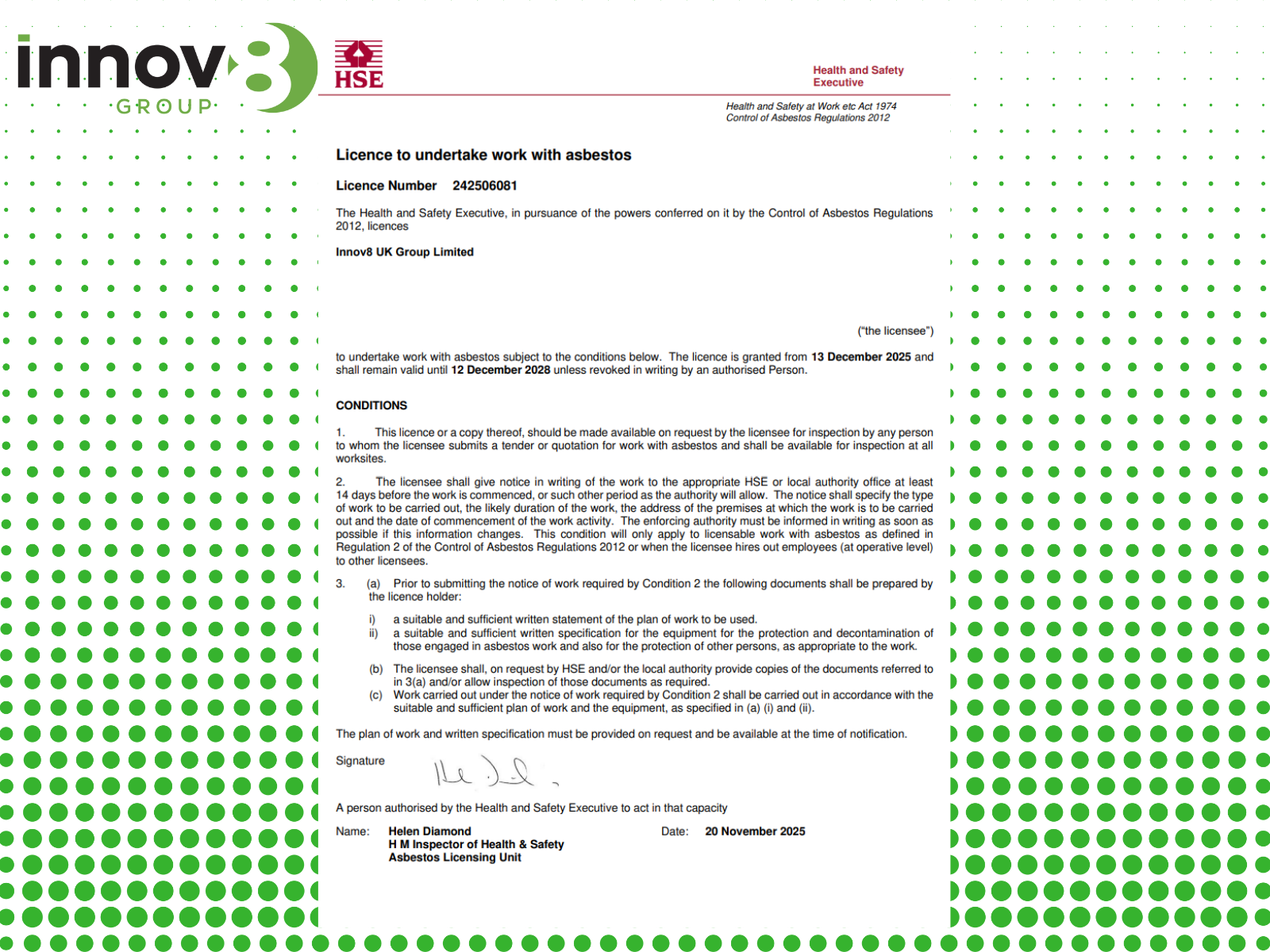
Innov8 solves this by keeping asbestos removal, soft strip and demolition under one roof, handled by an experienced, HSE-licensed team.
This creates:
-
A seamless workflow
-
Clear accountability
-
Faster turnaround
-
One point of contact
-
Fully aligned safety standards
-
Minimal disruption for the client
In the commercial and industrial world, this approach isn’t just helpful — it’s essential.
Soft Strip – The First and Most Important Step
Before any structural demolition takes place, soft strip work is almost always required. This process involves removing all internal non-structural items, including:
-
Fixtures and fittings
-
Ceilings and partitions
-
Furniture
-
Carpets and finishes
-
Mechanical and electrical components
-
Tiles, flooring and coverings
-
Plasterboard and insulation
Soft strip is crucial because it exposes structural elements and reveals concealed asbestos or hazardous materials that would otherwise go undetected.
Innov8’s advantage is clear:
Because our team is trained in both soft strip and asbestos management, we can identify, sample and remove ACMs immediately, without pausing the project or bringing in additional contractors.
This significantly speeds up overall demolition timelines and ensures complete compliance from the outset.
Asbestos Removal – The Core Component of Most Demolition Projects
In many commercial buildings in Manchester — especially offices, retail units, schools, healthcare facilities, industrial units and warehouses — asbestos is present throughout the structure. It may exist in:
-
Ceiling tiles
-
Partition walls
-
Boiler rooms
-
Service risers
-
Thermal insulation
-
Floor tiles and adhesive
-
Cement sheets
-
Roof structures
-
Ducting and pipework
Removing asbestos first is legally required. Innov8 provides:
-
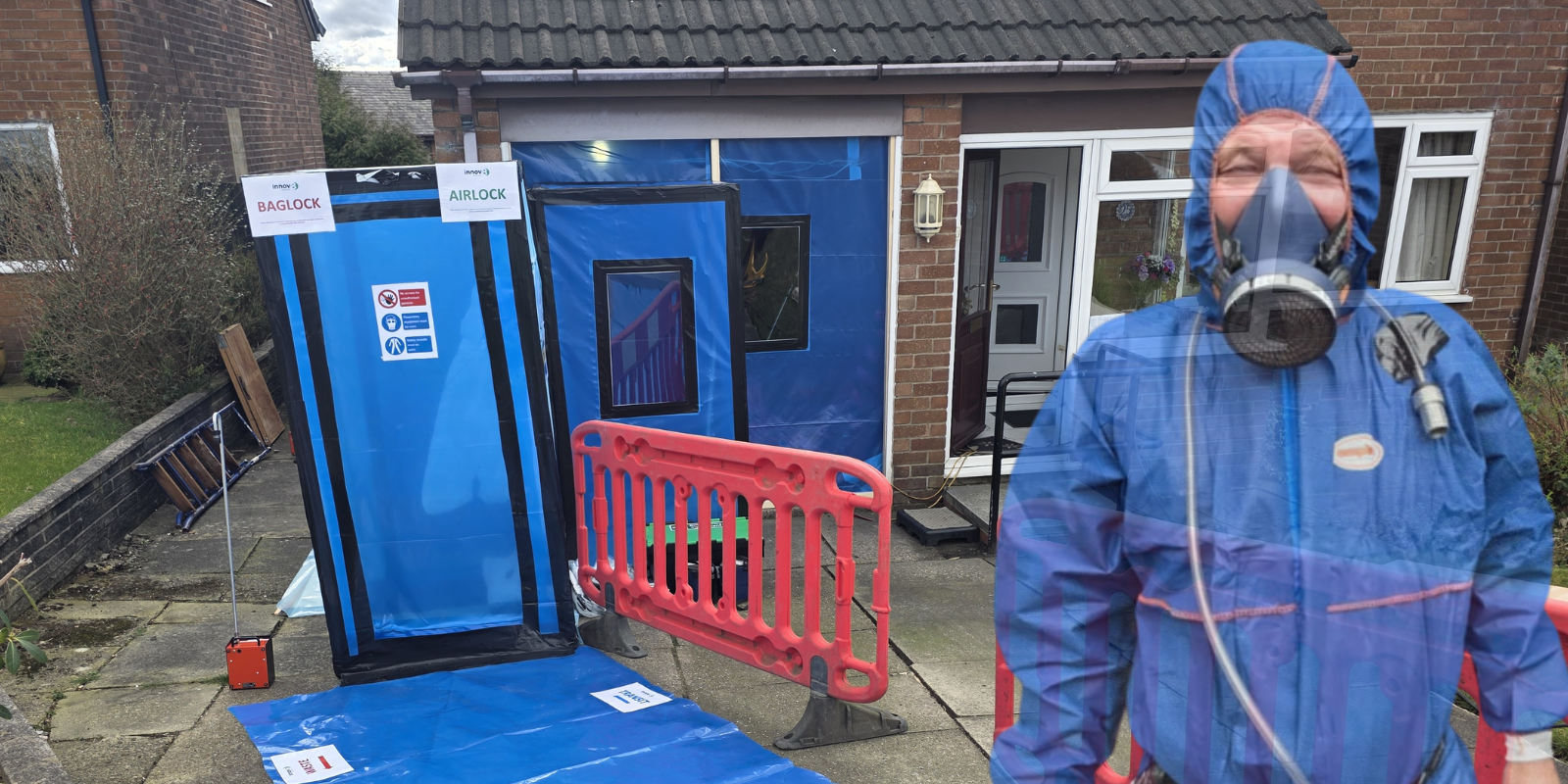
HSE-licensed asbestos removal
-
Air testing
-
Waste handling
-
Encapsulation where appropriate
-
Full documentation and certification
Because we are already on site for soft strip and demolition planning, the transition into asbestos removal is seamless — with no downtime for the client.
Decontamination and Hazardous Waste Removal
Many commercial and industrial sites require more than just asbestos removal. Older properties often contain:
-
Chemical residues
-
Oils and fuels
-
Contaminated insulation
-
Mould contamination
-
Lead paint
-
Mercury and other heavy metals
Our decontamination division handles the safe removal, packaging and disposal of all hazardous materials using fully licensed waste carriers. This is essential in:
-
Industrial plants
-
Manufacturing facilities
-
Workshops
-
Food production sites
-
Public buildings
-
Older council-owned stock
-
Large commercial estates
By removing all contaminants before demolition proceeds, we ensure complete compliance and a safe environment for the structural teams.
Waste Management – Keeping Projects Compliant and Efficient
Demolition produces large volumes of waste, and handling it incorrectly can lead to legal, environmental and financial consequences. Innov8 manages:
-
Segregation of materials
-
Safe handling of contaminated waste
-
Transport using licensed carriers
-
Disposal at authorised facilities
-
Full Environment Agency paperwork
Clients receive all required documentation, including:
-
Waste transfer notes
-
Consignment notes
-
Disposal certificates
-
Evidence of recycling and reuse
This level of transparency ensures complete compliance for audits, insurance and future development work.
Enabling Works, Structural Alterations and Preparation for New Builds
Once asbestos, soft strip and hazardous waste removal are complete, the next phase of demolition often includes enabling works such as:
-
Temporary propping
-
Structural alterations
-
Removal of non-load-bearing elements
-
Masonry adjustments
-
Site clearance
-
Access preparation
-
Hoarding and fencing
-
Ground preparation
These are essential steps for sites preparing for:
-
Extensions
-
Redevelopment
-
New commercial builds
-
Industrial expansions
-
Change of use projects
Innov8’s integrated approach ensures these stages follow logically and safely, with one team overseeing every step.
Where Our Demolition Services Are Most Commonly Required
We support a wide range of commercial and industrial sectors, including:
-
Warehouses and distribution centres
-
Offices and business parks
-
Retail units and shopping parades
-
Schools, colleges and universities
-
Healthcare and NHS buildings
-
Factories and processing plants
-
Public sector and council buildings
-
Hospitality venues and leisure facilities
-
Residential blocks and managed estates
In all these settings, demolition is closely connected with asbestos, soft strip and environmental work — making Innov8’s combined capability particularly valuable.
Why Choose Innov8 for Demolition and Soft Strip in 2025?
As regulations tighten and more buildings reach the stage where refurbishment or redevelopment is unavoidable, demand for safe, compliant and efficient demolition continues to grow. Businesses in Manchester and the UK increasingly need contractors who can:
-
Manage asbestos safely
-
Work around live environments
-
Deliver projects with minimal disruption
-
Keep costs predictable and fixed
-
Provide full documentation for compliance
-
Handle environmental, soft strip and demolition stages together
With over 30 years of combined experience, an HSE-licensed asbestos division, and a multi-disciplined demolition team, Innov8 provides exactly that.
When one contractor manages the entire chain — assessment, asbestos removal, soft strip, hazardous waste handling and demolition — everything happens faster, safer and more efficiently.
Three Quick FAQs
1. Do I need an asbestos survey before demolition?
Yes. A refurbishment/demolition (R&D) survey is legally required before any demolition or intrusive works begin.
2. Can demolition work happen while parts of the building remain occupied?
Where safe to do so, yes. Innov8 creates phased, controlled programmes to reduce disruption for commercial tenants and operational teams.
3. What documentation will I receive after demolition?
You will receive waste notes, asbestos certificates, environmental records and a full completion pack for compliance and future planning.